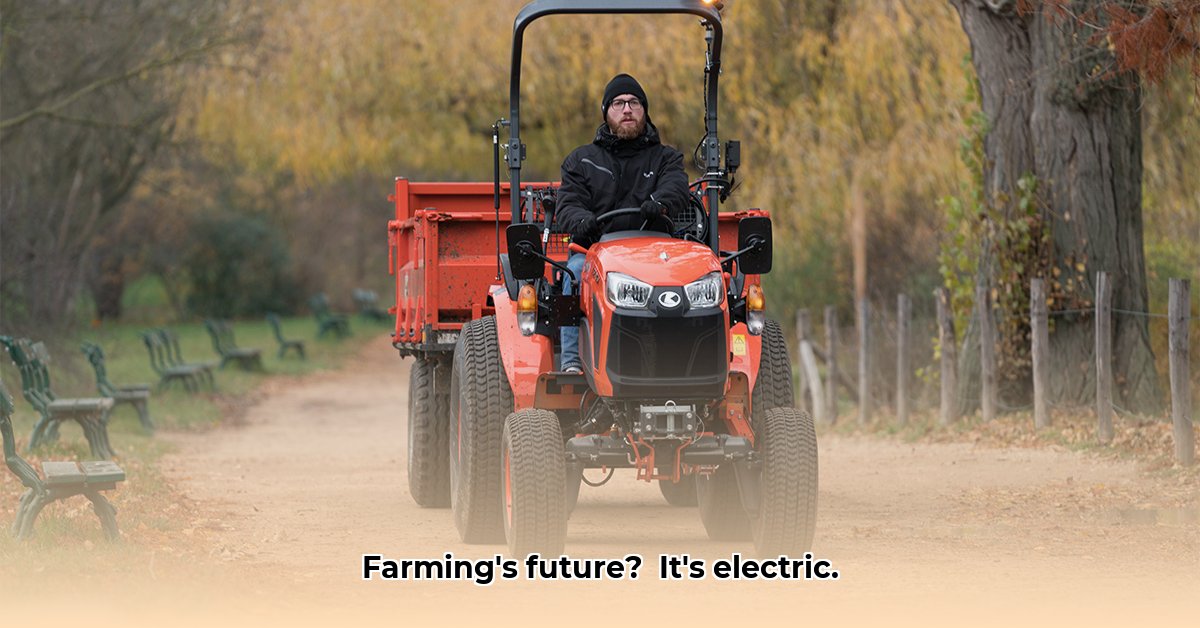
The burgeoning interest in electric compact tractors paints a picture of a greener, quieter future for agriculture. However, the reality of widespread adoption is more complex than the initial promise suggests. For more information on attachments, check out this helpful resource: compact tractor attachments. This article will delve into the advantages and disadvantages of electric compact tractors, providing a balanced perspective on their role in sustainable farming.
Electric Compact Tractors: Promise and Pitfalls
The allure of electric compact tractors is undeniable. Lower emissions contribute to a reduction in greenhouse gas emissions and improved air quality in rural areas. Their quieter operation enhances worker well-being and reduces noise pollution. Many manufacturers claim horsepower comparable to diesel models, suggesting similar work capabilities. Yet, this idyllic scenario requires critical examination.
Unveiling the Challenges
While the benefits seem apparent, the transition to electric compact tractors presents considerable hurdles. Data on pricing and model availability remains patchy, hindering accurate cost-benefit analysis—a necessity for any serious farming investment. The lack of comprehensive data adds uncertainty to the total cost of ownership (TCO). This is not merely the purchase price; it encompasses battery lifespan, potentially expensive replacements, and long-term maintenance. Furthermore, the environmental implications extend beyond tailpipe emissions, encompassing the manufacturing process and eventual disposal.
A Practical Guide for Farmers
Farmers considering electric compact tractors should proceed with a detailed, data-driven approach. This involves both short-term and long-term considerations:
Short-Term Considerations (0-2 years):
- Comprehensive Cost Analysis: Conduct a thorough assessment of the TCO, incorporating battery replacement estimates, maintenance, and energy expenses. Are the long-term savings substantial enough to justify the high initial investment?
- Explore Financing Options: Investigate leasing or financing options to mitigate the impact of the high upfront cost.
- Government Incentives: Research and utilize any available government subsidies or tax breaks designed for environmentally friendly agricultural equipment.
- Assess Operational Needs: Evaluate whether an electric tractor’s power, run time, and terrain suitability align with your farm's specific requirements.
Long-Term Considerations (3-5+ years):
- Charging Infrastructure: Plan for charging infrastructure, which may involve on-farm charging stations or mobile charging solutions.
- Battery Technology Advancements: Monitor advancements in battery technology that could influence battery life, replacement costs, and charging times.
- Maintenance and Service: Investigate service plans and maintenance contracts to mitigate unexpected repair costs and downtime.
- Resale Value: Consider the potential resale value of electric tractors in the long-term cost calculation.
The Crucial Role of Manufacturers and Governments
Manufacturers and governments play vital roles in accelerating the adoption of electric compact tractors.
Manufacturers:
- Transparency: Provide detailed and unambiguous information regarding pricing, specifications, and maintenance requirements.
- Farmer-Centric Design: Conduct research to understand farmer needs and design tractors that effectively address their challenges.
- Innovation: Invest in R&D to improve battery technology, reduce maintenance, and enhance overall efficiency.
- Reliable Support: Establish robust after-sales service networks to ensure timely repairs.
Governments:
- Data Standardization: Establish standardized reporting to facilitate clear comparisons between models.
- Financial Support: Expand financial incentives such as subsidies to enhance affordability.
- Infrastructure Development: Invest in rural charging infrastructure to address charging challenges in remote areas.
- Research Funding: Increase funding for research to drive innovation in electric tractor technology.
A Realistic Risk Assessment
The transition to electric compact tractors entails several risks. A thorough understanding of these potential issues facilitates informed decision-making:
| Potential Risk | Likelihood | Impact | Mitigation Strategies |
|---|---|---|---|
| High Initial Purchase Price | High | High | Government subsidies, financing options, leasing |
| Limited Model Availability | Medium | Medium | Increased manufacturer production, improved market transparency |
| Battery Life & Replacement Costs | Medium | Medium to High | Battery technology advancements, extended warranties, service contracts |
| Lack of Charging Infrastructure | High (Rural) | Medium to High | Government investment, development of mobile charging solutions |
| Lack of Data & Transparency | High | Medium | Standardized reporting by manufacturers, independent testing organizations |
| Potential for Unexpected Downtime | Medium | Medium | Comprehensive maintenance plans, readily available parts and technicians |
Total Cost of Ownership: A Comparative Analysis
The decision to adopt electric compact tractors hinges on a detailed comparison of their total cost of ownership (TCO) against that of diesel counterparts. This involves evaluating initial purchase prices, maintenance, fuel/electricity costs, repairs, and resale values across the equipment's lifespan. For diesel, fuel is the primary ongoing cost; for electric, battery replacements and charging infrastructure are key. Electricity prices can greatly influence long-term cost-effectiveness.
A Step-by-Step Comparison
Effective comparison involves:
- Defining Needs: Assess farm size, crop types, and annual operating hours.
- Gathering Cost Data: Research initial purchase prices, maintenance schedules (including battery replacement for electric), fuel/electricity expenses, and potential resale values.
- Long-Term Projection: Project costs over the equipment’s lifespan, factoring in inflation, technological improvements, and potential downtime.
- Environmental Impact Assessment: Consider the carbon footprint, encompassing manufacturing, operation, and end-of-life disposal.
- Return on Investment (ROI) Analysis: Compare the projected ROI for each tractor type.
The Path Forward: Gradual Transition
Electric compact tractors offer substantial potential for sustainable agriculture. However, challenges remain. A collaborative effort involving farmers, manufacturers, and governments is crucial for overcoming these obstacles and facilitating the gradual, responsible integration of this technology into farming practices. The transition won't be a revolution, but rather a measured evolution driven by technological advancements, economic realities, and supportive policies.